

How Do Custom Tattoos Work, Really?

You have an idea in your head. Maybe it is a memorial piece, a sleeve concept, a symbol tied to your story, or just a visual style you know you want on your skin. Then the big question hits: how do custom tattoos work when your idea is personal, specific, and not something you can just pull off a wall? The short answer is that custom tattooing is a collaboration between your vision and an artist’s skill, but the real answer is a lot more interesting.
How do custom tattoos work from idea to finished piece?
A custom tattoo usually starts with a concept, not a finished drawing. That matters because most strong tattoo work is not built by copying exactly what a client sketched on a napkin or saved in a phone album. It is built by translating an idea into a tattoo that actually works on the body.
That first stage is about clarity. You might come in with references, themes, placement ideas, and a general mood. An experienced artist looks at all of that and starts asking the right questions. What style fits the concept best? How large does it need to be to age well? Does the level of detail match the space? Is this meant to stand alone, or become part of a larger project later?
This is where custom work separates itself from flash. Flash tattoos are pre-drawn designs. A custom tattoo is created for you, your anatomy, and your goals. Even when reference images are involved, the finished design should be tailored rather than recycled.
The consultation is where the tattoo really begins
A lot of people think the drawing starts first. Usually, the consultation does. This is the stage where the artist learns what matters most to you and where you learn whether that artist is the right fit for the piece.
A good consultation is part creative meeting and part reality check. You bring inspiration, but the artist brings technical judgment. Some ideas need to be simplified. Others need to be enlarged. Certain placements may look great in a photo but wear differently over time because of movement, sun exposure, or how the body naturally changes.
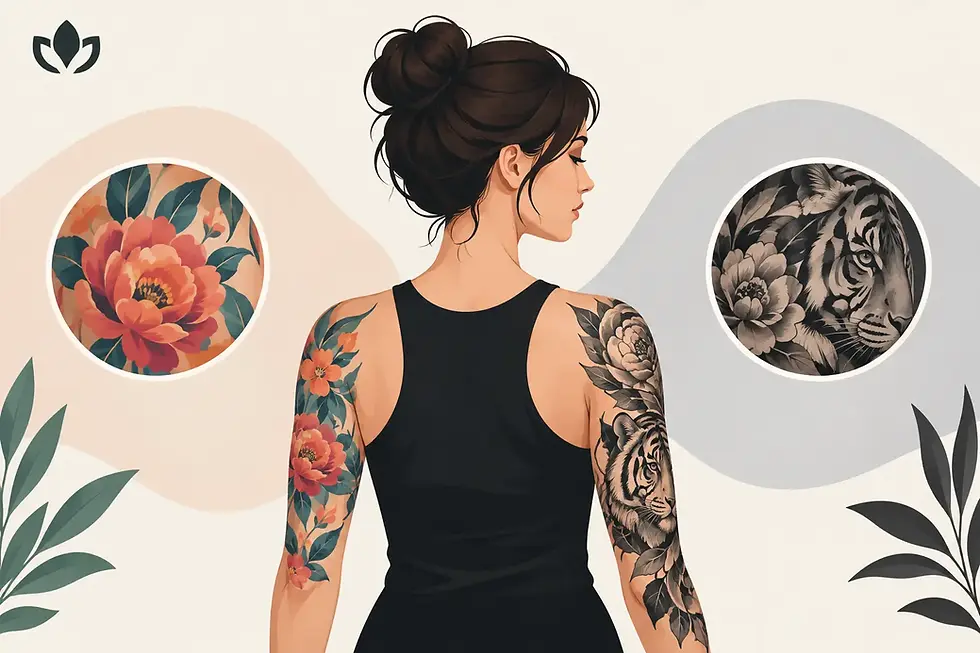
This is also when style becomes a major factor. A black-and-gray realism artist may approach your memorial concept very differently than someone whose strength is bold illustrative work. Neither approach is automatically better. It depends on the result you want. If you are asking how do custom tattoos work in a professional studio, one of the most honest answers is this: the right artist matters as much as the right idea.
In many cases, the artist will also discuss budget, number of sessions, scheduling, and whether a deposit is required to begin the design process. Larger or more detailed custom pieces often need more planning and more chair time, so pricing reflects both design labor and tattoo execution.
What to bring to a custom tattoo consultation
You do not need to arrive with a perfect brief. You do need enough direction to help the artist understand your taste. Reference images are helpful, even if you only like one image for the shading, another for composition, and another for the overall mood. Words can help too. Dark, delicate, aggressive, organic, clean, surreal, sacred, minimal - those descriptions give the artist a better feel for the final direction.
It also helps to be clear about what you do not want. Sometimes that is just as valuable. If you want a snake tattoo but hate a traditional look, say that early. If you want floral elements without making the piece feel soft or decorative, that changes design choices too.
Designing for skin is different from designing on paper
This is one of the biggest misunderstandings around custom tattooing. A strong tattoo design is not just a strong illustration. Skin has texture. Bodies curve. Areas stretch and compress. Ink settles over time. What looks incredible on a flat digital mockup can fail if it does not respect the shape and movement of the body.
That is why a custom tattoo artist thinks about flow. On an arm, the design may need to wrap. On the ribs, it may need to account for breathing and curvature. On a thigh, there is more room for detail, but composition still matters. Placement affects how the tattoo reads from different angles and how balanced it feels in motion.
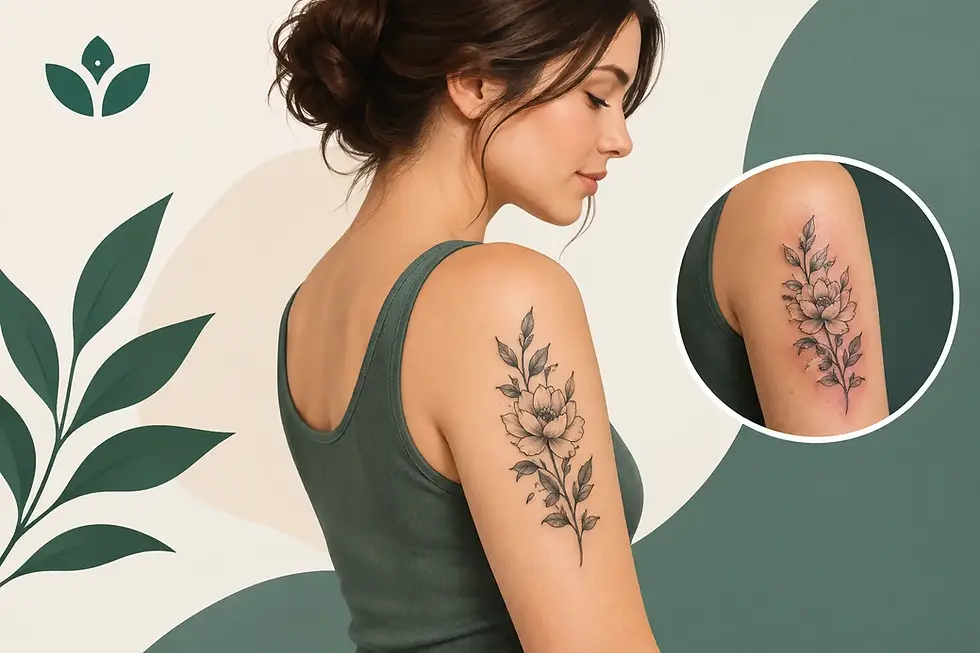
Detail is another trade-off. Many clients want intricate work packed into a small area. Sometimes that can be done. Sometimes it leads to a tattoo that heals muddy or ages poorly. A professional artist will guide you toward a design that looks sharp now and still reads well years from now.
The drawing process is not always instant
After the consultation, the artist usually develops the design based on everything discussed. Depending on the studio, the design may be shown before the appointment, at the appointment, or refined in stages for larger projects. There is no single universal system, but there is a common goal: build a tattoo that feels personal and performs well.
This part can test a client’s patience, especially if they are excited. Custom work takes time. Artists are balancing composition, line flow, shading, contrast, and long-term readability. They are also building something original, not dragging and dropping stock elements together.
Revisions can happen, but this is where trust matters. If you chose an artist because you love their portfolio, give them room to do what they do best. Collaboration does not mean micromanaging every line. It means sharing your vision clearly and letting a specialist translate it into strong tattoo design.
Tattoo day is about setup, fit, and final adjustments
When the appointment arrives, the design is fitted to your body. This is where size and placement often get fine-tuned. A stencil may be moved slightly to improve flow. The piece may be resized to better suit the anatomy. These are not last-minute problems. They are part of making the tattoo feel like it belongs there.
Before anything starts, you should have a chance to review the design and ask questions. If something feels off, speak up early. Minor adjustments are normal. What you want to avoid is agreeing to something you do not feel good about because you are nervous about saying so.
Once placement is locked in, the tattooing begins. Depending on the complexity of the piece, that could mean one session or several. Small custom tattoos may be finished in a few hours. A sleeve, back piece, or large-scale concept may unfold over multiple appointments.
Pain, of course, depends on placement, session length, and your own tolerance. There is no universal pain scale that works for everyone. What matters more is coming in rested, hydrated, and realistic about the process.
Custom tattoo pricing depends on more than size
Clients often expect custom pricing to be based only on inches. That is not how it works. Size matters, but so do complexity, placement, style, design time, and whether the tattoo requires multiple sessions.
A medium-sized lettering piece is a different job from a medium-sized black-and-gray portrait. One may be straightforward. The other may demand much more drawing time, more technical precision, and more session endurance. That difference shows up in the quote.
Custom work also reflects expertise. When you book with a seasoned artist, you are paying for more than time under the machine. You are paying for design judgment, technical control, safety standards, and the ability to create something that feels uniquely yours instead of generic. At a studio like Skinwalker Studio, that artist-led approach is the point.
What makes a custom tattoo actually successful?
The best custom tattoos do more than match the reference. They fit the person wearing them. They make sense on the body. They hold up visually. They feel intentional.
That success usually comes from a few things working together: a clear idea, an artist whose strengths match the concept, honest communication, and enough flexibility to let the design evolve into its strongest version. If any one of those pieces is missing, the process can still work, but it gets harder.
Clients sometimes worry they need to know exactly what they want before reaching out. You do not. You just need a starting point and a willingness to collaborate. A good artist can help shape the rest.
If you have been sitting on an idea because you were not sure how custom tattoos work, the best next step is simple: bring the concept, bring the references, and be ready for a real conversation. Great custom work starts there - not with a template, but with the chance to create something truly special on purpose.
Comments