

How to Choose Tattoo Style That Feels Like You

A tattoo can start as a single image in your head - a rose, a name, a creature, a symbol, a full sleeve idea - but the style determines how that idea lives on your skin. Learning how to choose tattoo style is less about picking what is trending and more about finding the visual language that makes your idea feel personal, intentional, and built to last.
The right answer is rarely one style in isolation. It comes from the relationship between your subject, your placement, your skin tone, the size you are willing to commit to, and the artist whose work speaks to you. Start there, and the decision gets much clearer.
Start With the Feeling, Not the Pinterest Board
Before you collect reference photos, put your idea into a few honest words. Do you want the tattoo to feel dark, delicate, powerful, nostalgic, playful, spiritual, clean, or raw? A black panther can become a bold traditional piece, a smooth black-and-gray realism tattoo, a graphic blackwork design, or a soft illustrative image. The subject stays the same. The energy changes completely.
This step matters because reference boards can get visually crowded fast. You may love the color palette in one piece, the linework in another, and the placement in a third, without actually wanting all three elements on your own body. Focus first on the mood you want to carry when you look at the finished tattoo.
For a memorial, you may lean toward fine line, black-and-gray realism, or illustrative work that has quiet detail. For a tattoo that should read from across the room, bold traditional, neo-traditional, or blackwork may fit better. If the goal is a highly personal image with a dreamlike edge, surrealism or a custom illustrative approach can give the artist more room to build something one of a kind.
Know What the Major Tattoo Styles Do Best
You do not need to memorize every tattoo category before booking. You do need a basic sense of what each style is designed to communicate.
Traditional and neo-traditional
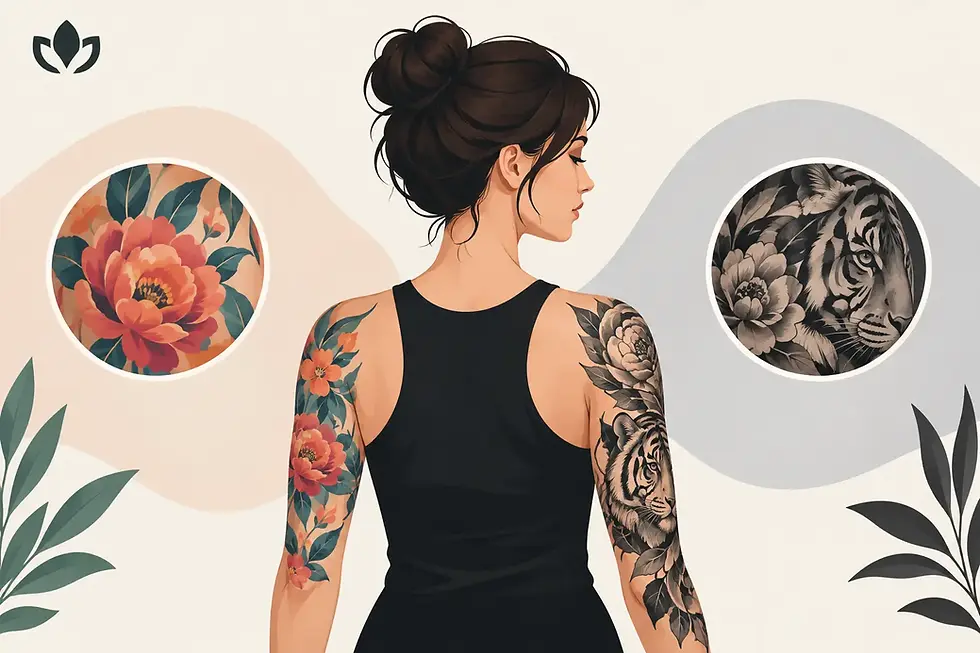
American traditional tattoos use confident black outlines, strong color, iconic imagery, and simple, readable shapes. They are made to hold their own over time and look great at many sizes. Neo-traditional builds on that foundation with more color variation, dimensional shading, ornamental details, and broader subject matter.
Choose these styles if you want an image with impact, visible structure, and a classic tattoo presence. They are especially strong for animals, flowers, daggers, skulls, portraits with a stylized look, and designs that need to work as part of a growing collection.
Black-and-gray realism
Black-and-gray realism uses value, contrast, texture, and careful shading to create lifelike images. Portraits, wildlife, religious imagery, statues, landscapes, and memorial work often shine in this style. The trade-off is that realism needs room. Tiny realism can lose the subtle detail that makes it convincing, especially as the tattoo settles and ages.
If you want a realistic piece, be open to your artist recommending a larger size or a placement with a broad, stable surface. That is not upselling. It is often the difference between a design that looks impressive for a season and one that reads clearly for years.
Fine line and minimal tattooing
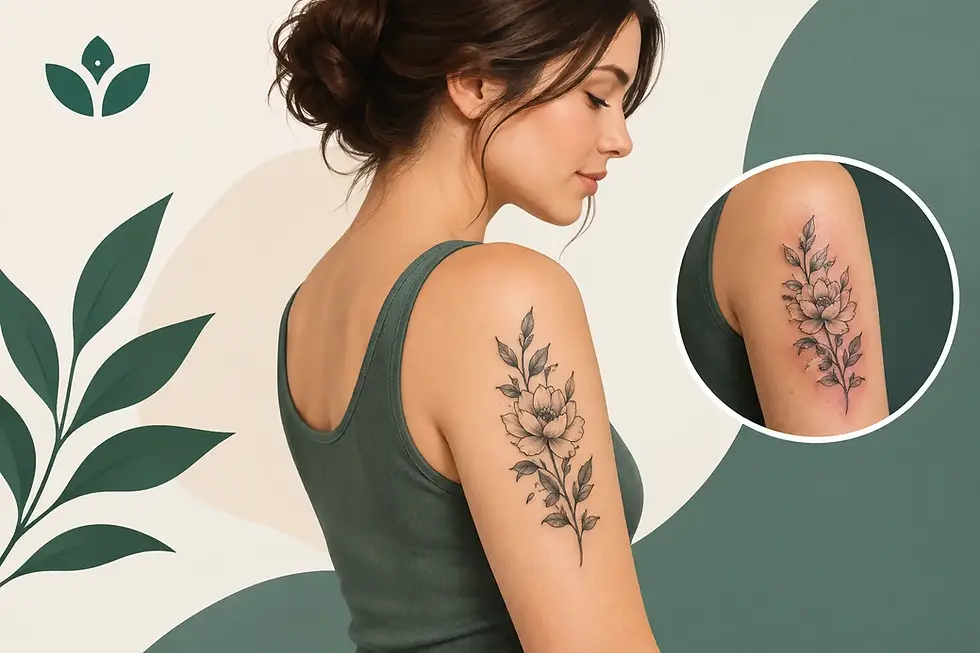
Fine line tattoos can feel refined, understated, and personal. They are often a natural fit for small symbols, script, botanical designs, and simple illustrations. But “fine line” should not mean faint, crowded, or hard to read. The smallest details have limits, and the skin is not paper.
Choose fine line when restraint is part of the point. If your concept depends on dozens of tiny features, a bolder approach may serve it better. Good design is knowing what to leave out.
Blackwork, geometric, and ornamental work
Blackwork uses solid black, graphic shapes, pattern, and contrast. Geometric and ornamental tattooing can bring in symmetry, sacred-inspired forms, architectural structure, or decorative flow that follows the body. These styles are powerful when you care as much about composition and placement as you do about a literal image.
They can also be excellent choices for building a sleeve, framing an existing tattoo, or creating a design that feels connected to the shape of your body. Precise placement is essential. A strong stencil and an artist with a clear eye for flow make all the difference.
Illustrative, anime, and custom hybrid styles
Illustrative tattooing lives between graphic art and realism. It can be soft, storybook-like, dramatic, sketch-inspired, or sharply stylized. Anime tattoos and other pop-culture work often fall into this larger custom space, where color, expression, movement, and recognizable details all matter.
A hybrid approach can be the best choice when you do not fit neatly into one category. Maybe you want black-and-gray shading with ornamental linework, or a traditional composition with a surreal subject. The key is to work with an artist who can make the blend look intentional rather than like several unrelated references pushed together.
Let Placement Set Some of the Rules
Placement is not an afterthought. It affects how much space you have, how the design moves, how visible it is, and how well fine detail will read. A design that looks great as a square image on a phone may need a complete rework for a forearm, calf, shoulder, rib, or thigh.
Long, vertical designs naturally suit forearms, shins, and the outer arm. Circular or centered designs can work beautifully on shoulders, knees, elbows, and the chest, though joints introduce movement and distortion. The back and thigh offer generous room for detailed work. Hands, fingers, feet, and the neck make a statement, but they also face more friction, sun exposure, fading, and visibility in daily life.
Be honest about the life you want the tattoo to have. If you need to cover it for work or family events, choose a placement that gives you that option. If you want it seen every day, choose an area you naturally look at and enjoy. Neither choice is more meaningful. It is your body and your routine.
Match the Design to the Size You Can Commit To
Every tattoo style has a minimum useful size. Clean linework needs breathing room. Realism needs space for tonal transitions. Script needs letters large enough to remain legible. A skilled artist can simplify an idea, but no one can make a detailed full scene perform like a clear, bold design at one inch tall.
Ask yourself what must stay in the piece. Is it the exact face in a portrait? The birth flowers? A specific quote? The color? The ability to add more tattoos around it later? Once you know the nonnegotiables, you can make smarter calls on style and scale.
A larger tattoo is not automatically better. Small tattoos can be striking when the concept is designed for the size. The problem comes from trying to shrink a large-tattoo idea until it becomes unreadable.
Choose the Artist Before You Choose the Appointment
The portfolio should guide your choice more than a style label. Look for artists who consistently tattoo the kind of work you want, not just one impressive example from years ago. Pay attention to healed work when available, line consistency, smooth shading, saturation, composition, and how designs sit on different bodies.
If you want a black-and-gray portrait, choose an artist whose portfolio proves they understand portraits. If you want a colorful neo-traditional sleeve, find someone who shows strong color packing and cohesive large-scale work. Versatility is valuable, but specialization matters when the tattoo has a particular technical demand.
Bring references to communicate direction, not to request a copy. The best custom tattooing happens when you explain what you like about each reference and allow the artist to build a design for your body. At Skinwalker Studio, that artist-led process is where a loose idea becomes a piece with structure, personality, and staying power.
Use Trends as Inspiration, Not Instructions
A current trend can absolutely be right for you. The question is whether you love the style itself or simply like seeing it on other people. Give the idea a little time. Save examples over a few weeks, then notice what keeps showing up. If you keep returning to the same contrast level, subject matter, or line style, that is useful information.
It also helps to picture the tattoo without the social media context. Would you still want it if no one else had seen it? Would you want it in five years? You do not need a life-changing story behind every tattoo, but you should want the work for your own reasons.
Bring a Clear Brief to Your Consultation
You do not need a finished sketch. In fact, a rigid sketch can limit the artist before they have considered placement and flow. Bring your subject, placement idea, size range, preferred style, reference images, and a short explanation of what you want the tattoo to feel like.
Be ready to discuss your budget and timeline honestly, especially for larger custom work. A sleeve, back piece, or detailed realism project may be better built across multiple sessions. Giving the work the right amount of time and space protects the final result.
The strongest tattoo choice is the one that still feels right after the artist has refined it for your body. Come in with a real idea, stay open to expert direction, and give your tattoo enough room to become something truly special.
Comments