

Custom Sleeve Tattoo Examples That Actually Work

A great sleeve is never just a stack of cool images. The difference between ink that fills an arm and a piece that feels right for years usually comes down to design flow, contrast, and meaning. If you are looking at custom sleeve tattoo examples for inspiration, the smartest move is to study how strong sleeves are built, not just which motifs look good in isolation.
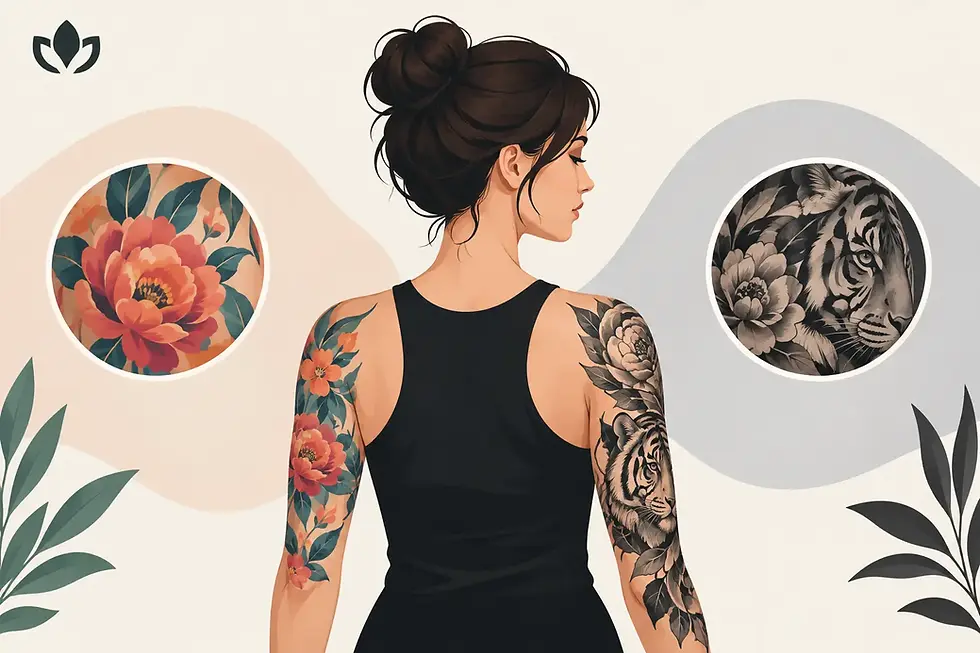
A custom sleeve should fit your body, your style, and your long-term comfort level. That means the best ideas are not copied straight from a photo. They are adapted. A rose sleeve on one person may rely on soft black-and-gray shading and negative space, while on someone else the same theme becomes bold color, heavier outlines, and tighter composition. The subject matters, but structure matters more.
What makes custom sleeve tattoo examples worth saving
Some inspiration photos are useful because they show craftsmanship. Others are useful because they show decision-making. The strongest sleeve references usually reveal a clear visual hierarchy. Your eye lands somewhere first, then moves naturally around the arm. There is balance between focal points, background texture, and breathing room.
That is why random collections of separate tattoos often feel unfinished, even when each tattoo is good on its own. A sleeve works best when the arm is treated like one canvas with curves, muscle lines, and motion built into the plan. Inner bicep placement feels different from outer forearm placement. The elbow and ditch are always tricky areas, both visually and physically. Good custom work accounts for that from the start.
Custom sleeve tattoo examples by style
Black and gray realism
This is one of the most requested sleeve directions for a reason. Black and gray realism can hold portraits, religious imagery, statues, animals, clocks, smoke, and architectural details without feeling chaotic, as long as the composition is handled well. It creates a dramatic, polished look and tends to age gracefully when values are strong and details are not overcrowded.
A strong example might center on a lion portrait on the upper arm, with carved stone textures and soft clouds wrapping through the shoulder. The forearm could carry a clock or memorial script, but the background would need restraint. Too much smoke, too many roses, and too many disconnected symbols can flatten the whole sleeve. The trade-off with realism is that it demands technical precision. When it is excellent, it is striking. When it is average, every weakness shows.
Color illustrative sleeves
Color sleeves give you a wider emotional range. They can be bright, dark, surreal, playful, aggressive, or cinematic. This style works especially well for nature themes, neo-traditional compositions, fantasy concepts, and designs built around personal symbolism.
One custom sleeve tattoo example in this lane could combine a raven, wildflowers native to a meaningful region, and a dramatic sunset palette. Another might use Japanese-inspired waves and koi with bolder reds, golds, and deep blues. The advantage is impact. The challenge is discipline. Too many saturated colors competing in one sleeve can make the work feel busy. A good artist will narrow the palette so the arm reads as one piece.
Fine line and ornamental sleeves
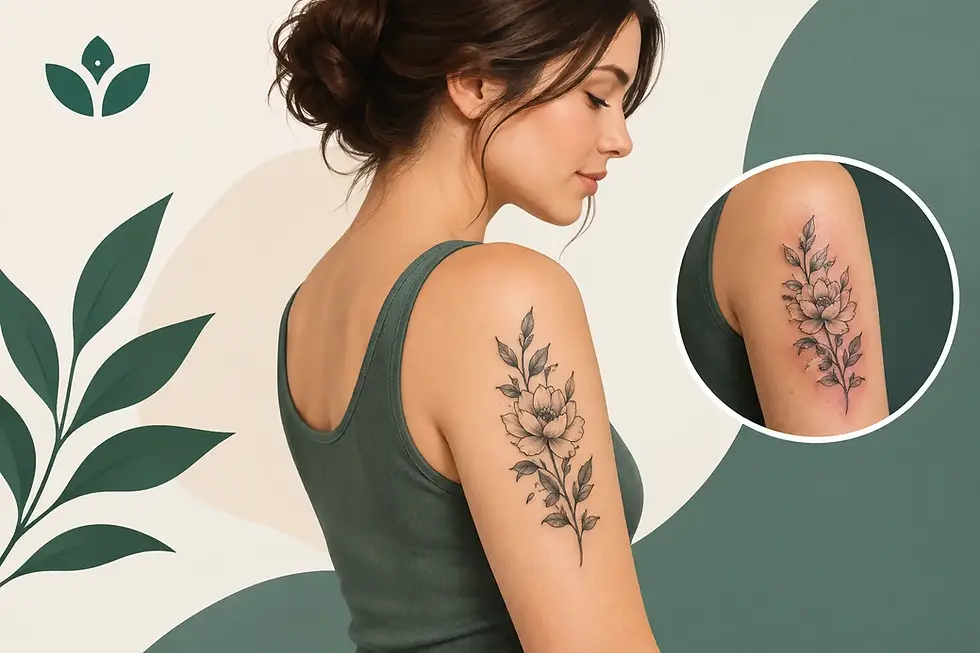
Not every sleeve needs to be loud. Fine line and ornamental sleeves can feel elegant, modern, and highly personal. These designs often rely on pattern work, sacred geometry, botanical forms, lace-inspired structures, or delicate illustrative elements that flow with the body.
A good example could start with an ornamental mandala at the shoulder cap, then extend down with symmetrical filigree and subtle floral details. Another might pair snakes, moons, and botanical linework in a more organic path around the arm. The trade-off here is longevity and contrast. Fine line work can be beautiful, but it needs smart spacing and enough visual weight to heal well over time.
Japanese-inspired full sleeves
Japanese tattooing remains one of the strongest foundations for sleeve composition because it was built for body flow. Large main subjects, secondary elements, movement, and background all work together naturally. Dragons, koi, peonies, hannya masks, chrysanthemums, tigers, snakes, and waves all have established visual language, but a custom version still depends on how those elements are arranged for the individual.
One sleeve might feature a dragon wrapping from shoulder to wrist with wind bars and blossoms directing the eye. Another might balance koi on the lower arm with peonies above and a dark background that unifies the piece. The upside is timeless structure. The caution is respect for the style. If you love Japanese-inspired work, commit to the visual rules enough to let it breathe.
Theme ideas that translate well into custom sleeves
Memorial sleeves are common because they allow multiple symbols to tell one story. Instead of forcing dates, portraits, handwriting, and objects into separate spaces, a well-built sleeve can connect them with atmosphere and flow. The best memorial sleeves are emotional without becoming cluttered.
Nature sleeves also hold up well because they offer movement and layering. Forest scenes, birds, mountain silhouettes, ocean imagery, and seasonal botanicals can move around the arm in a way that feels organic. These are especially strong when the client wants a sleeve that feels personal but not overly literal.
Mythology and spiritual themes can create powerful sleeves too. Statues, angels, demons, sacred imagery, celestial maps, and symbolic animals all carry visual weight. The key is clarity. If every image has equal importance, the sleeve can lose direction.
For some clients, the right answer is not a literal story at all. It is a mood. Dark surrealism, biomechanical textures, horror-inspired imagery, abstract blackwork, or high-contrast illustrative designs can all become compelling sleeves when the aesthetic is defined early.
How to turn inspiration into a sleeve that feels like yours
The best consultation starts with references, but not just tattoo references. Bring art, textures, photos, symbols, and examples of what you do not like. That last part matters. Saying you want a floral sleeve means very little on its own. Do you want soft and airy, dark and dramatic, traditional and bold, or elegant and minimal? Those are completely different sleeves.
It also helps to know your non-negotiables. Maybe the sleeve needs to include a memorial rose, a family animal symbol, or a black-and-gray approach. After that, let the artist solve the composition. This is where custom work earns its value. A skilled artist can take your idea and shape it to the arm so it looks intentional from every angle.
If you are in the Roanoke area and want to create something truly special, this is the kind of project that benefits from working with a studio that treats sleeves as artist-led design, not menu-item tattooing.
Common mistakes people make when using custom sleeve tattoo examples
The biggest one is trying to combine too many unrelated ideas. A sleeve can absolutely hold variety, but it still needs one visual language. A realistic portrait next to cartoon color work next to ornamental geometry usually feels disjointed unless there is a very deliberate concept behind it.
Another mistake is obsessing over tiny details before the overall layout is set. People often focus on one object, like the exact shape of a flower or the exact expression on a wolf, without asking how that piece connects to the rest of the arm. Sleeve success comes from composition first, details second.
Scale is another issue. Images that look impressive on a phone screen may not translate well to skin if they are packed too tightly. Better tattoos usually give important elements room to read clearly from a few feet away.
Then there is pain and pacing. A full sleeve is not one quick session. Some areas are much easier than others, and some designs take longer because smooth shading, color saturation, or intricate linework require patience. Planning matters, especially if budget and schedule are part of the equation.
Choosing between a full sleeve, half sleeve, or patchwork build
A full sleeve makes the strongest visual statement and gives the artist the most freedom to build flow. It is ideal if you already know you want a unified piece from shoulder to wrist. A half sleeve offers more flexibility and can still feel complete, especially if the upper arm or forearm is the main focus.
Patchwork can work too, but it depends on your taste. Some people want a collected look with separate custom tattoos that may later be tied together with filler or background. That can be a strong choice if you like variety. If you want the cleanest and most cohesive result, a planned sleeve usually wins.
The right direction comes down to how you want your arm to read from a distance and how much commitment you are ready to make now. There is no fake-correct answer here, just better alignment between vision and execution.
A sleeve should feel like it belongs on you, not like it was borrowed from someone else’s saved folder. Use custom sleeve tattoo examples to spot quality, identify your taste, and start the conversation, then leave room for a real artist to shape the final piece into something that fits your arm and your story.
Comments