

What Is a Custom Tattoo Studio?

Walk into a flash-heavy shop and you might pick a design off the wall by lunchtime. Walk into a custom studio, and the conversation starts somewhere else - with your idea, your style, your story, and the artist who can turn all of that into something that belongs on your skin. If you have been asking what is a custom tattoo studio, the short answer is this: it is a tattoo studio built around original, artist-led work created for the individual client rather than copied from a standard sheet of pre-drawn designs.
That difference matters more than people think. A custom tattoo is not just a tattoo with a few tweaks. It is a collaborative design process shaped by placement, anatomy, style, symbolism, and long-term wear. The best custom studios are not simply selling time in a chair. They are offering interpretation, technical judgment, and the kind of creative partnership that can make a piece feel personal from the first sketch to the final pass.
What Is a Custom Tattoo Studio, Really?
At its core, a custom tattoo studio is a place where the work begins with consultation. Instead of asking which exact design you want from a binder, the artist asks what you want the tattoo to say, how you want it to feel, where it will live on the body, and what visual style makes sense for the idea.
That can mean building a tattoo from scratch, combining multiple references into one original composition, or reworking a loose concept into something stronger and more wearable. It can also mean steering a client away from choices that look good on a phone screen but will not age well on skin.
This is one of the biggest differences between custom work and commodity tattooing. In a custom environment, the artist is not just applying a design. They are designing for you.
How a Custom Studio Differs From a Standard Tattoo Shop
Not every tattoo shop works the same way, and that is not automatically a bad thing. Some shops do a brisk business in flash, walk-ins, and classic designs that are ready to go. If someone wants a small, timeless piece and understands exactly what they are getting, that model can work well.
A custom tattoo studio is different because the service is more involved. The artist usually spends more time in pre-drawing, consultation, placement planning, and revision. Appointments are often booked in advance. The portfolio matters a lot because clients are choosing not just a shop, but a specific artist whose style, line quality, shading, composition, and experience fit the project.
That also means custom work tends to be a better fit for larger pieces, memorial tattoos, sleeves, coverups, highly personal concepts, or anything where style and execution need to be tailored carefully. The trade-off is simple: you get more personalization, but it usually takes more planning, more communication, and sometimes a higher investment.
The Custom Tattoo Process
A real custom studio usually follows a clear process, even if every artist handles it a little differently. It starts with the idea stage. Some clients arrive with a fully formed vision. Others bring a mood, a few references, and a rough sense of meaning. Both are normal.
From there, the consultation helps define the direction. The artist may ask about size, body placement, style preferences, black-and-gray versus color, level of detail, and whether the tattoo needs to work with existing pieces. This is where experienced artists start solving problems before they hit the skin.
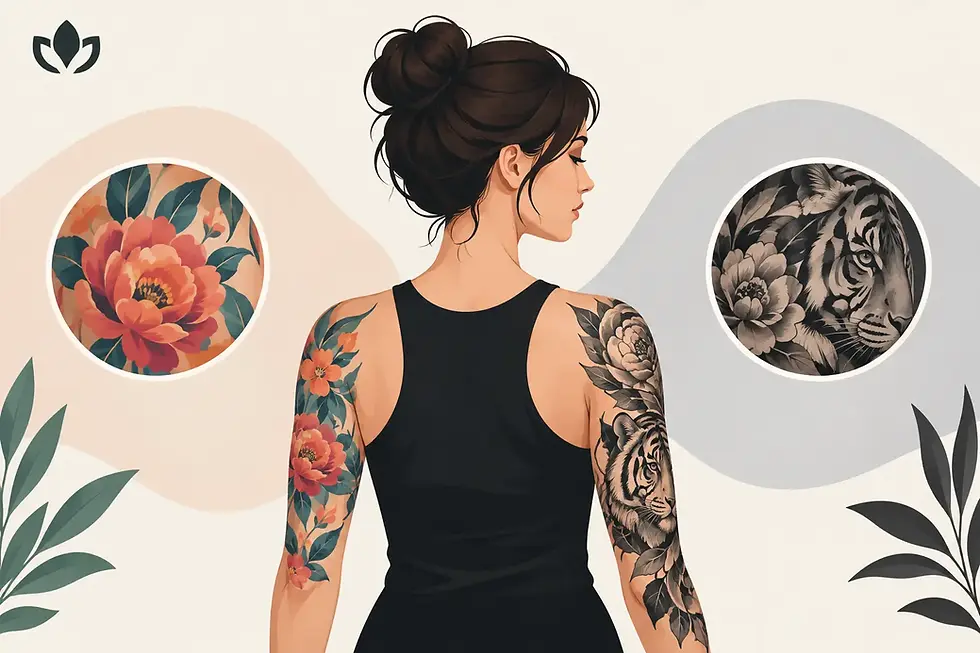
Design comes next. In a custom setting, this is where artistry shows up in a serious way. The artist is not tracing your Pinterest board. They are translating inspiration into a design that works as a tattoo. That includes flow, readability, contrast, skin tone, and how the piece will age over time.
Then comes tattoo day, or multiple sessions if the piece is larger. By that point, the goal is not just to execute a cool image. It is to apply a design built specifically for the client and their body.
Why People Choose a Custom Tattoo Studio
For some people, the appeal is obvious. They do not want something generic. They want a tattoo that carries weight, memory, identity, or a very specific visual language.
For others, the benefit is more practical. A custom studio can often deliver better placement decisions, cleaner cohesion with existing work, and a stronger final composition. That matters whether you are building a sleeve, getting a first tattoo, or investing in a piece that covers a large area.
There is also trust. In a custom environment, you are usually working more closely with an artist who has a visible style and a body of work you can evaluate. That helps clients make smarter choices. If an artist is known for black-and-gray realism, bold illustrative work, or fine detail, you can see whether their strengths line up with your vision.
For clients who want something meaningful and well executed, that level of fit is a big deal.
What to Expect From the Artists
A strong custom studio is usually artist-forward. That means the artists are not interchangeable, and the studio does not pretend they are. Each one may bring different strengths, whether that is black-and-gray tattooing, large-scale composition, fine line work, traditional structure, or multi-style versatility.
That is a good thing for clients. It means your project can be matched to the right specialist instead of forced into the hands of whoever has time available. In a serious custom studio, the artist's eye matters. They may refine your concept, challenge parts of it, or suggest a stronger direction altogether.
That can feel intimidating to first-timers, but it is usually a sign that the artist is protecting the quality of the result. Custom work is collaboration, not a vending machine transaction.
Is a Custom Tattoo Studio Better for First-Time Clients?
Often, yes - especially if the first tattoo means a lot to you.
A first-time client usually needs two things at once: guidance and confidence. A custom studio can provide both because the process is built around conversation. Instead of being rushed toward a design choice, you get room to ask questions, talk through placement, and understand why certain designs translate better to skin than others.
That does not mean every first tattoo needs to be a huge custom piece. Sometimes a small tattoo is the right call. But even a simple tattoo benefits from thoughtful execution, and a custom studio is more likely to approach the piece as permanent artwork rather than a quick transaction.
When Custom Work May Not Be Necessary
It depends on what you want.
If you are looking for a very small symbol, a classic flash design, or something straightforward that does not require design development, a fully custom process may be more than you need. Not every tattoo has to be a major creative build.
But if the piece is personal, highly visible, part of a larger plan, or meant to stand apart from common designs, custom is usually the smarter route. The more the tattoo matters to you, the more useful that design process becomes.
How to Tell if a Studio Is Truly Custom
The easiest clue is how they talk about the work. A custom studio emphasizes artists, portfolios, consultation, and project fit. You should be able to see distinct artistic identities rather than a generic promise to do everything for everyone.
You will also notice that booking tends to be more deliberate. Custom shops are often appointment-driven because real design work takes time. Some even offer private sessions for clients who want a more focused experience.
Look at whether the studio shows specialization, not just availability. A place like Skinwalker Studio stands out because custom work is tied directly to artist strengths, from black-and-gray expertise to broader multi-style execution and modern piercing services under one professional roof. That kind of structure signals intention, not assembly-line tattooing.
The Real Value of a Custom Tattoo Studio
The real value is not just originality for originality's sake. It is the combination of craftsmanship, fit, and meaning.
A custom tattoo studio gives your idea the chance to become better than the version you walked in with. It brings an experienced artist into the process early enough to shape the piece, solve design issues, and create something that belongs on your body rather than just on a screen. That is why custom work resonates with people who care about self-expression and quality. They are not only buying a tattoo. They are investing in a piece of art built around who they are.
If you are choosing something permanent, personal, and visible, that extra thought is not a luxury. It is the point. And when the right artist helps bring your vision to life, the finished piece feels less like something you picked and more like something that was made for you from the start.

Comments